Skip to content
How Agentic AI Automates the Entire Legacy System Modernization Lifecycle
Introduction:
Most enterprises don’t modernize legacy systems because they lack the desire. They delay modernization because the systems themselves are intimidating. They’re large, stitched together over years, and full of hidden logic that no one on the current team wrote. Every change feels risky. One wrong update can break ten downstream integrations.
This is the reality of legacy system modernization, and it’s why traditional modernization projects often drag on far longer than expected. But something has shifted over the last two years. Automation specifically Agentic AI has become mature enough to handle the complexity that once overwhelmed engineering teams. It doesn’t replace human architects, but it takes over the parts that used to bury them in manual work.
What used to take months of scanning, documenting, and testing can now be condensed into structured workflows that move faster and with more accuracy. Agentic AI doesn’t guess; it reads the system as it is, traces connections, highlights risks, and supports decisions humans need to make.
Let’s walk through how Agentic AI actually automates the legacy system modernization lifecycle, step by step.
Why Legacy System Modernization Is So Hard to Begin With
Legacy systems are complicated not because they are old, but because they’ve evolved unevenly over time. Patches from different eras sit side by side. Older libraries hide inside modules no one has touched in years. Some integrations work only because no one dares change them. Documentation rarely matches the real system anymore.
Three things make legacy system modernisation especially difficult:
- Unknown dependencies
Teams often discover connections that were never documented. One outdated scheduler might quietly support four critical workflows.
- Fragile architecture
Small adjustments trigger unpredictable behavior in other parts of the system.
- Slow manual analysis
Without tooling, developers spend weeks just understanding the system before doing any modernization work.
This is where legacy system modernization services traditionally start with long analysis phases that strain timelines and patience.
Agentic AI changes this dynamic entirely.
What Agentic AI Actually Does (and Doesn’t Do)
There’s a misconception that AI “modernizes the system automatically.” It doesn’t. What it does is automate the heavy analysis, scanning, refactoring assistance, and testing work that used to cost teams months.
Think of Agentic AI as a group of specialized assistants working together:
- One reads the entire codebase
- Another maps dependencies
- Another tests behaviors
- Another validates security gaps
- Another watches environments after deployment
Each agent handles a domain of expertise, passing context to the next. Humans still lead the project, but AI fills in the gaps teams usually burn time on.
Automation in modernization isn’t about speed alone. It’s about certainty knowing what must change, what can stay, and what could break.
For understanding where application-level AI fits in, this comparison helps:
modernizing applications with Agentic AI →
How Agentic AI Automates Each Stage of the Modernization Lifecycle
Stage 1 Discovery: The Deep Dive No Human Team Has Time For
Before refactoring anything, the system needs to be understood properly. Agentic AI scans:
- Code repositories
- Libraries
- API calls
- Configuration files
- Stored procedures
- Hard-coded logic
- Integration points
What engineers used to do manually reading thousands of lines of code AI handles in minutes. The difference isn’t just speed; it’s completeness. AI doesn’t overlook modules, old branches, or hidden components.
This is the foundation of legacy system modernization services today: clarity where none existed before.
Stage 2 Dependency and Architecture Mapping
Legacy systems rarely behave like cleanly separated layers. AI maps:
- Service interactions
- Database connections
- Message queues
- File I/O dependencies
- Batch processes
- External APIs
These maps help engineers see the system the way it truly functions not the way they assume it works.
AI also shows which components depend on outdated frameworks, unsupported libraries, or risky patterns.
Stage 3 Refactoring Assistance: AI Highlights What Matters Most
Here is where Agentic AI becomes especially valuable. Instead of telling teams to rewrite thousands of lines, it identifies:
- Deprecated functions
- Incompatible API calls
- Hard-coded configuration that prevents scaling
- Security-sensitive portions of code
- Areas that will break during modernization
Modernization becomes surgical, not brute-force.
Example: Instead of rewriting 8,000 lines in a module, AI may reveal that only 240 lines actually require updates.
This accuracy reduces modernization cost and protects system behavior.
Stage 4 Automated Test Generation
Testing is usually where modernization schedules fall apart. Writing regression suites manually takes enormous effort, especially for older systems with limited documentation.
Agentic AI automates:
- Unit test generation
- Integration test cases
- Regression workflows
- Performance scenarios
- Behavior validation scripts
This is one of the biggest accelerators in the entire modernization lifecycle. Without automated testing, modernization timelines would remain unpredictable.
Stage 5 Security and Compliance Validation
Legacy systems often contain outdated encryption, vulnerable endpoints, and old authentication logic. Agentic AI runs continuous security scans and highlights issues like:
- Unsafe method calls
- Insecure deserialization
- Old hashing functions
- Vulnerable third-party libraries
- Misconfigured access paths
This provides a far cleaner modernization process compared to manual scanning.
Stage 6 Deployment and Post-Migration Monitoring
Migration is often more dangerous than modernization itself. One missed dependency can break downstream systems. Agentic AI helps prepare deployment scripts, validate environment configurations, and watch logs after rollout.
Post-deployment, AI monitors:
- Performance dips
- Log anomalies
- Error spikes
- Resource bottlenecks
This keeps modernized systems stable as enterprises transition from legacy infrastructure.
Where Agentic AI Has the Biggest Real-World Impact
Some modernization scenarios benefit more from AI than others:
Monolithic systems
Where one application controls dozens of functions, AI clarifies boundaries humans struggle to see.
Systems with missing documentation
AI reconstructs knowledge developers lost years ago.
Heavily integrated environments
AI maps complex interactions faster than manual effort.
Large refactoring efforts
AI reduces redundant work by recommending targeted code changes.
Cloud migrations
AI highlights incompatibilities that could cause failure after deployment.
This is why large enterprises increasingly adopt AI-first modernization models they provide speed without sacrificing accuracy.
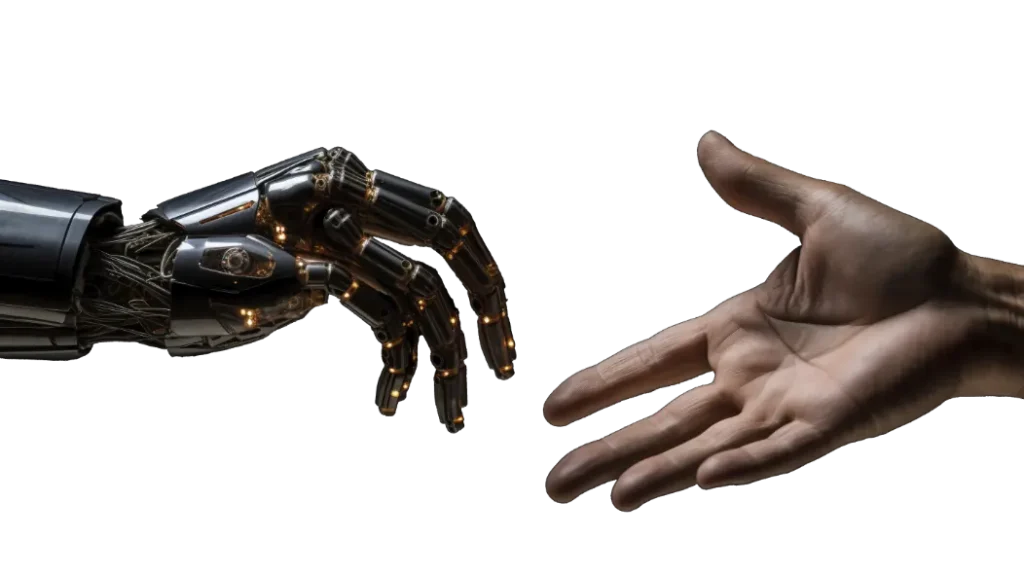
Humans Still Lead. AI Just Removes the Barriers.
Despite all its capabilities, AI doesn’t replace architects or engineers. Instead:
- AI handles the exhaustive scanning
- AI writes tests humans don’t have time for
- AI highlights issues humans might miss
- Humans make design decisions
- Humans guide modernization strategy
- Humans confirm changes AI suggests
This collaboration is what makes modernization successful.
AI accelerates. Humans direct.
Enterprises choosing modernization partners should look for those who understand this balance. If you need guidance on selecting one, this resource helps:
choosing the right modernization partner →
How Enterprises Can Prepare for AI-Driven System Modernization
A few preparatory steps make modernization smoother:
- Clean repository structures
- Remove abandoned branches
- Document critical workflows
- Identify modules with highest business impact
- Prioritize systems with scaling or compliance issues
These steps help Agentic AI read the system more accurately from day one.
Conclusion: Agentic AI Turns Modernization from “Overwhelming” to “Executable”
Modernization used to be a leap of faith. Teams hoped they understood enough of the legacy system to make the right changes. Now, with Agentic AI automating deep analysis, dependency mapping, test generation, and post-deployment monitoring, modernization becomes a controlled process instead of a gamble.
Enterprises don’t modernize faster because they cut corners they modernize faster because AI reveals the truth about the system upfront and supports every step of the journey.
For a deeper look at modernization across both applications and full systems, visit the full page for
Legacy System Modernization Services →