PLATFORM FOR MODERN
DEVELOPMENT,
POWERED BY AN BEST CODING
ASSISTANT FRAMEWORK
An enterprise AI code assistant should do more than autocomplete. Sanciti AI generates 80 to 90% complete code from approved user stories, scans it against OWASP and NIST, and works inside IntelliJ, VS Code and Eclipse.
Copilot is in the IDE. Maybe Cursor or Windsurf too. The individual developer productivity gains are real: completions are faster, boilerplate disappears, obvious mistakes get caught before they com pound.
And yet the codebase still has the same problems it had before any of those tools arrived.
The legacy systems nobody wants to touch are still untouched. The technical debt that consumes 40 percent of every sprint is still consuming 40 percent of every sprint. The compliance documentation still takes three weeks to assemble before a regulated release. The senior engineers are still spending their mornings decoding what a function written in 2016 was supposed to do.
This is not a failure of those AI code assistants. It is a scope problem. Every AI code assistant currently in wide use was designed to make individual developers faster at writing new code. That is genuinely valuable and genuinely insufficient for the problems enterprise engineering organizations actually face at scale.
The question worth asking is not which AI code assistant writes the best autocomplete. It is what an AI powered code assistant needs to do to actually change how an enterprise engineering organization operates across the full codebase, across the full SDLC, across every team working on every system simultaneously.

- What an ai code assistant actually is, and what it was originally built for?
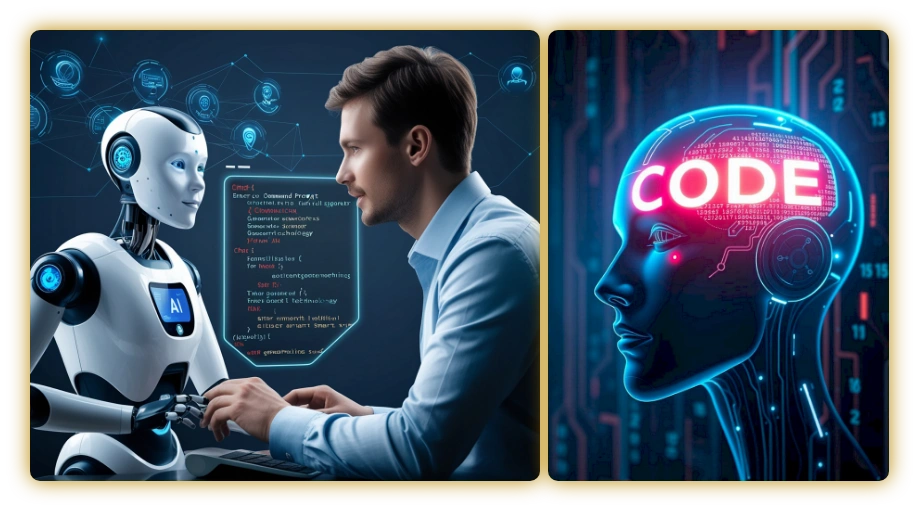
An AI code assistant is a tool that uses machine learning to help developers write, complete, review, and improve code in real time. In its most common form the form that Copilot, Tabnine, Codeium, and similar tools represent it sits inside the developer’s editor and responds to what the developer is working on in the moment.
The underlying capability is genuine. A good coding assistant ai reads context from the file open in the editor, understands the pattern of what is being written, and surfaces completions, suggestions, and corrections that save the developer real time. For greenfield development writing new features, building new services, working in well-structured modern codebases a best ai coding assistant measurably improves individual output.
The limitation is equally genuine. These tools see the file. They do not see the system. They respond to the developer’s current context. They do not carry the context of the full architecture, the full dependency graph, the full history of decisions that produced the codebase the developer is working inside. As a result, every suggestion they make is local. Every completion they offer is valid within the file but potentially blind to consequences outside it.
For individual developers working on well-defined, well-documented, modern codebases, that limitation is manageable. For enterprise engineering teams working on complex, distributed, partially legacy systems with compliance requirements on every change. That limitation is the entire problem.


- Where Every AI Code Assistant Currently on the Market Stops Short

The tools most commonly described as the best ai code assistant, Copilot, Cursor, Windsurf, Tabnine, Replit, earned that reputation legitimately. They made developers faster. They reduced friction in the editor. They brought AI assistance into the daily workflow in a way that felt natural rather than disruptive. But watch what happens when you point them at the problems enterprise engineering teams actually spend their time on.
A developer working in a fifteen-year-old Java service with no documentation opens the file, makes a change assisted by their code assist ai, and ships it. The AI code assistant saw the file. It did not see that the method being modified is called by four other services with different expectations about the return format. It did not know that the business logic embedded in that function has compliance implications that require documentation before the change can be released. It did not flag that the pattern being introduced has a known security vulnerability that OWASP identified three versions of this framework ago.
The developer did everything right. They used the best ai coding assistant available to them. And the change still created a problem not because the tool failed at what it was designed to do, but because what it was designed to do was not enough for the context it was operating in.
This is the ceiling every current AI code assistant hits in enterprise environments. Not a product flaw a fundamental scope boundary. These tools were designed for developer-level productivity. Enterprise engineering organizations need system-level intelligence.


- What an Enterprise-Grade AI Powered Code Assistant Actually Needs to Do?

When engineering leaders evaluate AI powered code assistant options for enterprise deployment, the criteria that matter are different from what individual developers weigh when choosing a coding assistant ai for their personal workflow.
An enterprise AI code assistant needs to understand the full codebase before it touches any part of it. Not the file currently open. Not the repository currently checked out. The complete system every service, every dependency, every API boundary, every shared component across every repository the organization maintains. Without that understanding, every suggestion it makes carries the same risk as a developer working without context.
It needs security compliance built into every output not as a separate review step but as an automatic validation layer on every suggestion, every completion, every refactoring recommendation. In enterprise environments, code that introduces an OWASP vulnerability or violates NIST guidelines is not just a technical problem it is a compliance event with business consequences.
It needs to handle legacy systems specifically. Most enterprise codebases are not modern, well-documented, fully tested systems. They are complex, partially documented, partially understood systems that have been accumulating business logic for years. An AI powered code assistant that cannot work safely in that environment is not an enterprise tool it is a tool for teams that have already solved the hard problems.
It needs to generate documentation automatically as a byproduct of the assistance it provides. In regulated industries, every code change needs an audit trail. An AI code assistant that makes changes without producing that trail creates compliance debt faster than it resolves technical debt.
And it needs to operate at the organizational level not just assisting one developer with one file, but running autonomously across multiple workstreams simultaneously, handling the systematic execution that should not require senior engineering attention while surfacing only the decisions that genuinely do.


- How Sanciti AI's AI Powered Code Assistant Works Across the Full SDLC
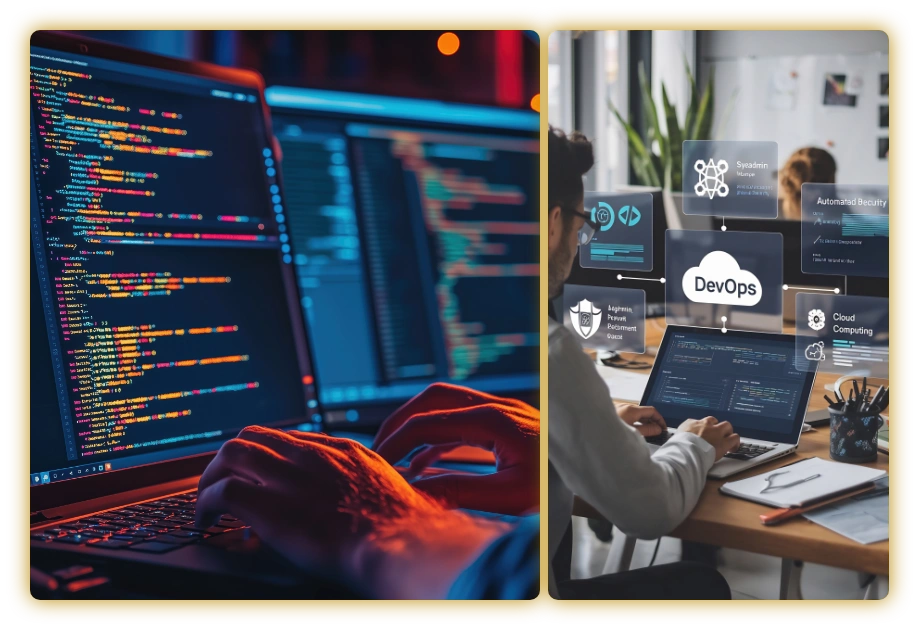
Sanciti AI is a Generative AI SDLC platform built by V2SOFT. Its AI code assistant capability is not a layer on top of an existing IDE it is a system-level intelligence that operates across the full software development lifecycle through a chain of LLM calls designed specifically for enterprise-scale codebases.
The process begins with the first LLM call analyzing your codebase and returning the complete file and folder structure every repository, every service, every component mapped and returned as structured output. That output becomes the input to the next LLM call, which goes deeper identifying relationships between components, surfacing dependencies, characterizing the behavior of individual modules in the context of the full system. Each step in the chain builds on the output of the previous one, so by the time the AI code assistant makes any suggestion, it has been validated against the complete picture of what the system actually is and how it actually works.
This chained LLM approach is what separates Sanciti AI from every current best ai coding assistant on the market. The assistance is not local. It is system-aware from the first interaction.

LEGMOD
AI Code Assistance That Works on Legacy Systems Specifically
Most AI code assistants treat legacy systems as out of scope. The code is too complex, too undocumented, too risky to assist with confidently. Sanciti AI’s LEGMOD module is built for exactly this scenario.
LEGMOD handles migration from COBOL, older Java frameworks, and legacy .NET environments to modern architectures using the understanding RGEN produces to extract and model the business rules embedded in the legacy code before any transformation begins. Hidden dependencies are surfaced. Behaviors are characterized. The modernized output is validated against what the original system actually did.
For enterprise teams whose most critical systems are also their most untouchable ones, LEGMOD is where the AI powered code assistant delivers value that no other tool in the market currently offers.

RGEN
The AI Code Assistant Starts by Understanding What Already Exists
Before Sanciti AI’s AI powered code assistant assists with a single change, RGEN reverse-engineers the existing codebase and generates structured documentation automatically use cases, business logic maps, dependency documentation, requirement artifacts all produced directly from source code without anyone writing a document manually.
For enterprise teams working in legacy environments with no documentation, RGEN transforms an opaque system into a mapped, understandable codebase before any assistance begins. The AI code assistant does not guess at what the system does. It knows because RGEN produced the understanding from the code itself.
This matters because an AI code assistant working without that understanding is making suggestions in the dark. RGEN turns the lights on before Sanciti AI touches anything.

CVAM
Security Validation on Every Output the AI Code Assistant Produces
Security is not a review step that happens after the AI code assistant has done its work. It is built into every output.
It is a requirement that most AI code assistants currently on the market simply do not meet.

TESTAI
Every Suggestion the AI Code Assistant Makes Gets Validated
The risk that makes engineering teams cautious about AI-assisted changes is regression a suggestion that looks correct but alters behavior in ways that surface under specific conditions. Sanciti AI’s TESTAI module addresses this directly.
After every change the AI code assistant makes, TESTAI generates unit tests, regression tests, integration tests, and performance tests for the affected components. These are built fresh around the changed code not recycled from an existing test suite that may have been written against the old structure. Every behavior the system exhibited before the change is tested against the output after it.
Teams do not ship AI-assisted code hoping it works. They ship it with evidence that it does.

AGENTIC CODERS
When the AI Code Assistant Becomes Autonomous
Sanciti AI’s agentic coders connect them into a continuous, autonomous workflow operating at the scale of the full engineering organization.
Agentic coders do not assist one developer with one file. They work within guardrails the engineering team defines and surface only the decisions that genuinely require human judgment.
From AI Code Assistant to Agentic SDLC:
For teams that have tried every best ai coding assistant available and found that individual developer productivity gains did not translate into organizational velocity improvements agentic coders are the answer to why. The problem was never that developers needed better autocomplete. The problem was that the AI code assistant was operating at the wrong level of the organization.
The shift from a coding assistant ai that helps one person to agentic coders that transform how the entire engineering organization works is the shift that actually moves the metrics engineering leaders care about delivery speed, defect rates, onboarding time, compliance overhead, and the velocity of teams working in systems that have been accumulating complexity for years.
For teams dealing specifically with code quality and legacy systems at scale, see how Sanciti AI handles.

- The Teams Sanciti AI's AI Code Assistant Is Built For?

Sanciti AI’s AI powered code assistant is not the right tool for a solo developer building a greenfield application. For that use case, Copilot or Cursor will serve well.
It is the right tool for enterprise engineering organizations where the problems are larger than any individual AI code assistant was designed to solve.
Engineering teams managing codebases that span multiple repositories, multiple languages, and multiple years of accumulated decisions that nobody fully documented. CTOs and VPs of Engineering in regulated industries where every code change needs security validation and audit documentation as standard practice. Organizations that have already deployed best ai coding assistant tools at the individual developer level and found that the productivity gains at the developer level did not translate into the organizational velocity improvements the investment was supposed to deliver.
These are the teams for whom a system-level AI powered code assistant one that understands the full architecture, validates every change against compliance standards, handles legacy systems specifically, and operates autonomously at the organizational level through agentic coder is not an upgrade over what they currently use. It is a different category of tool solving a different category of problem.

- Common Questions About AI Code Assistants For Enterprise Teams
Copilot and Cursor are developer-level tools they assist individual developers writing new code in the editor. Different scope, different outcomes.
The best ai code assistant for regulated industries needs built-in security compliance validation, automatic audit documentation, and the ability to work safely with legacy systems.
At the individual level, a coding assistant ai responds to what a developer shows it in the editor. At the enterprise level, Sanciti AI’s code assist ai operates through a chain of LLM calls that first maps the complete file and folder structure of your codebase, then uses that map as context for every subsequent action making every suggestion system-aware rather than file-local.
Most cannot they lack the system context to understand what legacy code does and what depends on it. Sanciti AI’s LEGMOD module is purpose-built for legacy environments, using RGEN’s reverse-engineered documentation to understand what the legacy system does before making any changes.
A code assist ai responds to developer prompts and assists with individual tasks. Agentic coders operate autonomously planning, executing, validating, and documenting entire workstreams without requiring constant direction. Sanciti AI’s agentic coders are what the platform uses to deliver AI code assistant capability at the organizational level rather than the individual developer level.
Yes. Sanciti AI integrates with GitHub, Jira, Jenkins, VS Code, IntelliJ, Eclipse, Confluence, and existing CI/CD pipelines. Engineering teams keep working in the tools they already use.
THE AI CODE ASSISTANT YOUR ENGINEERING ORGANIZATION ACTUALLY NEEDS
The gap between what current AI code assistants deliver and what enterprise engineering organizations actually need is not closing on its own. Individual developer productivity tools will keep getting better at what they do, and will keep stopping at the same ceiling when pointed at the problems that live above the file level.
Sanciti AI was built to operate above that ceiling. A system-level AI powered code assistant that understands your full architecture, handles your legacy systems, validates security on every output, generates documentation automatically, and scales through agentic coders to the level of the full engineering organization.
The result is not developers who write code slightly faster. It is engineering organizations that deliver faster, maintain less, and build on a codebase that gets cleaner over time rather than more complex.
See how Sanciti AI’s AI code assistant approaches your specific codebase. Your architecture, your legacy systems, your compliance requirements.